I knoI know that I am going to get dissed by a lot of people because of this post, but I want to take a moment to explain. I am not opposed to the state of Israel, but I am against the government and what it has done to the country, the people and the IDF. As an American who moved to Israel in the early 1970s, after the Yom Kippur war, and served in the IDF in a combat infantry unit, I have a lot to say about what I did and what I saw. At that time, I was trained to fight against an army (primarily Syrian) and not civilians and when I did serve in the territories there were certain regulations about how we were supposed to treat the Palestinians. And although we tried to follow those regulations, I became very aware of how the lines were being crossed my us. They started out small, but grew. So much so that in March 1988, about 6 months after I was discharged (and 5 months after I returned to the USA), a group of veteran combat officers formed Peace Now in response to Sadat’s visit to Israel. They wrote a letter to Begin “calling upon the government to make sure this opportunity for peace was not lost. ” This was the Israel that I loved, and the army that I served in. There was a basic desire for peace. It was not all peaches and cream, or in Israel’s case milk and honey, but the people were tired of fighting. But things began to change in radical ways. In settlement movement began to expand under the eyes and support of successive governments and the nation began to change. Peace Now and other organizations continued (and continue) to exist, protest and speak out against the wars and military actions and against the activities in the occupied territories. But for reasons too complicated to go into right now, the nation slid to the right, eventually leading to the assassination of Rabin and the ascension of the right and especially bibi, his crew and the settlement enterprise. Since my discharge I had always aligned myself with organizations that promoted peace with our neighbors and especially with the Palestinians. I see it as not only the right thing to do but the only thing to do if we really want to live there, under our olive and fig trees. But since those days after my discharged I have discovered and learned about those who do not share my view, especially the American Jews, who have let me know their position by accusing me of being a traitor, anti-Israel, anti-Semitic, and all sort of other nasty things. This has never stopped. In fact, it has increased since the Gaza war began. It is so tiring to hear the fertilizer coming from these people’s mouths, especially since most ot them live in the US, and although they may visit Israel on a regular basis have never lived there, and have never served in the IDF. Many have retired to Israel, way past the draft age. Some have children that have served or do serve in the IDF, but it is a different kind of IDF that I know. And I am very sad about this, and disheartening for me to watch these changes happening. I moved to Israel long ago because of the beauty of the country and the spirit of the people, who sang about peace and an end to war. I left the country after my discharge because I did not want to serve in the reserves and fight any more. I have been back as a visitor and as an artist-in-residence where I led collaborative art workshops with Jews, Moslems and Christians in the north. I have friends from all three faiths, Israelis and Palestinians who manage to retain that spirit that originally brought me to Israel despite the difficulty in doing so and continue to work together for a land where they can live together mostly in peace (I am a realist, there will always be some conflict, but that will be between individuals and not nations). So to be sure, I am not a traitor, am not a coward, do not hate those who are of a different faith, or speak a different language. I am also happy to be a Jew and I see a different future from those who are like that and cannot see any future for any of us all unless we get our proverbial shit together and start concerning ourselves with what really matters, such as the blessings of sitting together with a coffee, a tea or a cup of arak under our olive and fig trees.w that I am going to get dissed by a lot of people because of this post, but I want to take a moment to explain. I am not opposed to the state of Israel, but I am against the government and what it has done to the country, the people and the IDF. As an American who moved to Israel in the early 1970s, after the Yom Kippur war, and served in the IDF in a combat infantry unit, I have a lot to say about what I did and what I saw. At that time, I was trained to fight against an army (primarily Syrian) and not civilians and when I did serve in the territories there were certain regulations about how we were supposed to treat the Palestinians. And although we tried to follow those regulations, I became very aware of how the lines were being crossed my us. They started out small, but grew. So much so that in March 1988, about 6 months after I was discharged (and 5 months after I returned to the USA), a group of veteran combat officers formed Peace Now in response to Sadat’s visit to Israel. They wrote a letter to Begin “calling upon the government to make sure this opportunity for peace was not lost. ” This was the Israel that I loved, and the army that I served in. There was a basic desire for peace. It was not all peaches and cream, or in Israel’s case milk and honey, but the people were tired of fighting. But things began to change in radical ways. In settlement movement began to expand under the eyes and support of successive governments and the nation began to change. Peace Now and other organizations continued (and continue) to exist, protest and speak out against the wars and military actions and against the activities in the occupied territories. But for reasons too complicated to go into right now, the nation slid to the right, eventually leading to the assassination of Rabin and the ascension of the right and especially bibi, his crew and the settlement enterprise. Since my discharge I had always aligned myself with organizations that promoted peace with our neighbors and especially with the Palestinians. I see it as not only the right thing to do but the only thing to do if we really want to live there, under our olive and fig trees. But since those days after my discharged I have discovered and learned about those who do not share my view, especially the American Jews, who have let me know their position by accusing me of being a traitor, anti-Israel, anti-Semitic, and all sort of other nasty things. This has never stopped. In fact, it has increased since the Gaza war began. It is so tiring to hear the fertilizer coming from these people’s mouths, especially since most ot them live in the US, and although they may visit Israel on a regular basis have never lived there, and have never served in the IDF. Many have retired to Israel, way past the draft age. Some have children that have served or do serve in the IDF, but it is a different kind of IDF that I know. And I am very sad about this, and disheartening for me to watch these changes happening. I moved to Israel long ago because of the beauty of the country and the spirit of the people, who sang about peace and an end to war. I left the country after my discharge because I did not want to serve in the reserves and fight any more. I have been back as a visitor and as an artist-in-residence where I led collaborative art workshops with Jews, Moslems and Christians in the north. I have friends from all three faiths, Israelis and Palestinians who manage to retain that spirit that originally brought me to Israel despite the difficulty in doing so and continue to work together for a land where they can live together mostly in peace (I am a realist, there will always be some conflict, but that will be between individuals and not nations). So to be sure, I am not a traitor, am not a coward, do not hate those who are of a different faith, or speak a different language. I am also happy to be a Jew and I see a different future from those who are like that and cannot see any future for any of us all unless we get our proverbial shit together and start concerning ourselves with what really matters, such as the blessings of sitting together with a coffee, a tea or a cup of arak under our olive and fig trees.
I’m told that the following message, which I received earlier today, purporting to be from Liz Cheney, is a hoax. She didn’t sent it. It’s an excellent and important message nonetheless. (If you know who did send it, give them my thanks and let me know who they are so I can alert the rest of you.)
***
From Liz Cheney
Dear Democratic Party,
I need more from you.
You keep sending emails begging for $15,
while we’re watching fascism consolidate power in real time.
This administration is not simply “a different ideology.”
It is a coordinated, authoritarian machine — with the Supreme Court, the House, the Senate, and the executive pen all under its control
Reposted fom the Occupy Democrats Facebook page from 6/16/2025
BREAKING: Donald Trump makes a monstrous decision in the wake of the historic “No Kings” protests and his pathetic failed parade — announces that he will be expanding his fascist ICE crackdowns to numerous cities. And it gets so much worse… “Our Nation’s ICE Officers have shown incredible strength, determination, and courage as they facilitate a very important mission, the largest Mass Deportation Operation of Illegal Aliens in History,” Trrump wrote on Truth Social. “Every day, the Brave Men and Women of ICE are subjected to violence, harassment, and even threats from Radical Democrat Politicians, but nothing will stop us from executing our mission, and fulfilling our Mandate to the American People.” “ICE Officers are herewith ordered, by notice of this TRUTH, to do all in their power to achieve the very important goal of delivering the single largest Mass Deportation Program in History,” he continued. The “all in their power” piece is a chilling directive given the extremely brutal way in which ICE agents have already been conducting themselves. They’re kidnapping people while masked, tearing families apart, and denying people due process. Any escalation beyond their current tactics would like identical to those practiced by totalitarian dictatorships. “In order to achieve this, we must expand efforts to detain and deport Illegal Aliens in America’s largest Cities, such as Los Angeles, Chicago, and New York, where Millions upon Millions of Illegal Aliens reside,” Trump went on. “These, and other such Cities, are the core of the Democrat Power Center, where they use Illegal Aliens to expand their Voter Base, cheat in Elections, and grow the Welfare State, robbing good paying Jobs and Benefits from Hardworking American Citizens,” he wrote, trotting out a laundry list of debunked right-wing conspiracy theories. “These Radical Left Democrats are sick of mind, hate our Country, and actually want to destroy our Inner Cities — And they are doing a good job of it!” he went on. “There is something wrong with them. That is why they believe in Open Borders, Transgender for Everybody, and Men playing in Women’s Sports — And that is why I want ICE, Border Patrol, and our Great and Patriotic Law Enforcement Officers, to FOCUS on our crime ridden and deadly Inner Cities, and those places where Sanctuary Cities play such a big role. You don’t hear about Sanctuary Cities in our Heartland!” Moving past the absurd allegation that Democrats want “Transgender for Everybody,” a completely nonsensical statement that shows Trump is too lazy to even clearly articulate his own bigotries, the fact is that these cities do no want federal intervention. ICE crackdowns will lead to more cruelty and less stability. That chaos, in turn, will give Trump a pretext to exercise more state violence against his political enemies, exiting his MAGA base. Republicans believe in “states’ rights” until a Democratic state wants to exercise its right to treat people with dignity and empathy. In their worldview, the only thing that states really have a “right” to do is enforce Republican policies. “I want our Brave ICE Officers to know that REAL Americans are cheering you on every day,” Trump lied. “The American People want our Cities, Schools, and Communities to be SAFE and FREE from Illegal Alien Crime, Conflict, and Chaos. That’s why I have directed my entire Administration to put every resource possible behind this effort, and reverse the tide of Mass Destruction Migration that has turned once Idyllic Towns into scenes of Third World Dystopia.” “Our Federal Government will continue to be focused on the REMIGRATION of Aliens to the places from where they came, and preventing the admission of ANYONE who undermines the domestic tranquility of the United States,” he went on.” “To ICE, FBI, DEA, ATF, the Patriots at Pentagon and the State Department, you have my unwavering support. Now go, GET THE JOB DONE! DJT” he concluded. The fact that this authoritarian outburst, an exceptionally long one by Trump’s Truth Social standards, came in the wake of the protests and his failure of a parade is no coincidence. This man is pouring all of his insecurities, resentments, and embarrassment into lashing out at innocent migrant families. He’s making his psychological inadequacies our collective problem. We are being ruled by a narcissistic tyrant and it’s going to get a lot worse before it gets better. Please like and share!
Time for non-violent civil disobedience
Robert Reich
Jun 8
Friends,
What is our moral responsibility as citizens of the United States when the President of the United States moves to deploy thousands of American soldiers against us?
Trump signed a memo late yesterday ordering 2,000 members of the National Guard to be deployed in Los Angeles County after federal immigration agents in riot gear squared off with hundreds of protesters for a second consecutive day.
Trump’s action is extreme although technically legal. Title 10 of the United States Code allows a president to federalize the National Guard units of states to suppress “any insurrection, domestic violence, unlawful combination, or conspiracy.” In a presidential memo, Trump said, “To the extent that protests or acts of violence directly inhibit the execution of the laws, they constitute a form of rebellion against the authority of the Government of the United States.”
Why is he doing it, and why now?
Because Trump can’t stand to be humiliated — as he has been in the last two weeks. By senate Republicans refusal to quickly enact his so-called One Big Beautiful Bill. By Xi Jinping’s refusal to back down on trade (and restrict shipments of China’s rare earths, which American industry depends on). By Putin’s refusal to end the war in Ukraine. By the federal courts pushing back against his immigration policy. And, now, by insults and smears from the richest person in the world, who has a larger social media following than does Trump.
So what does Trump do when he’s humiliated? He deflects public attention. Like any bully, he tries to find another way to display his power — especially over people whom he doesn’t consider “his” people.
He has despised California since the 2016 election when the state overwhelmingly voted against him.
And what better Ground Zero for him to try out his police state than Los Angeles — a city teaming with immigrants, with Hollywood celebrities who demonize him, and wealthy moguls who despise him?
He is calling out the National Guard to provoke violence. As California governor Gavin Newsom said, “that move is purposefully inflammatory and will only escalate tensions.”
Exactly. Trump wants to escalate tensions. He wants a replay of the violence that occurred in the wake of the George Floyd murder — riots, mayhem, and destruction that allow him to escalate his police state further — imposing curfews, closing down parts of Los Angeles, perhaps seeking to subdue the entire state. And beyond.
Please do not give him this. Don’t fall into his trap.
We cannot be silent in the face of Trump’s dictatorial move. But we must not succumb to violence.
What is needed is peaceful civil disobedience. Americans locking arms to protect those who need protection. Americans sitting in the way of armored cars. Americans singing and chanting in the face of the Americans whom Trump is drafting into his handmade civil war.
Americans who do not attempt to strike back, but who do what many of us did during the Civil Rights and anti-Vietnam War movements — peacefully but unambiguously reject tyranny.
A humiliated Trump is the most dangerous Trump. But he will overreach. He already has. And this overreach will ultimately be his undoing.
As long as we keep our heads.
May we look back on this hellish time and feel proud of what we did.
Nick Sousanis, a brilliant scholar and comic creator just released a new comic about due process. Please read and share (and send comments to him if so inclined) https://spinweaveandcut.com/
It has been a while since I posted here. For the past year and a half I have been exploring other platforms for this blog and without mentioning names or details (except that I was rather disappointed with the results and support). I was rather happy with the actual content of the posts, so here there are (the most recent in on top). There is one more platform that I am exploring, and if I decide to change, I will let you all know. In the meantime thank you for your support and read on!
Listening to Fatoumata Diawara October 19
I’m really enjoying listening to a live concert of the amazing Fatoumata Diawarathe from Côte d’Ivoire in West Africa. Her voice is powerful, urgent and mesmerizingly beautiful. At one point in the set, she took a break to talk about her music, home, and culture. history and to recognize the greatness of Nelson Mandela for Africa and the world. She spoke elegantly about the need for people to lean about each and others’ cultures. .What she said at minute 29 both surprised and encouraged and reminded me that there are others out there saying similar things in their languages- speaking and art. https://www.youtube.com/watch?v=jWJAvmjfCFI&t=1335s&ab_channel=AfricaFestivalW%C3%BCrzburg-TheOriginal%21
A Case Study About Creating Graphic Novels in the Classroom
Thinking about problems arising from the lack of understanding about the very real trials and tribulations caused by forced migrations, and trying to adjust to a new land, new customs and new ways of living, I thought back to this passage from my dissertation about a very creative project in West Florida.
One of the more interesting programs using graphic novels to investigate social justice takes a very different approach. Rather than using existing graphic novels to start conversations, a team of educators provided instruction about the formal elements of graphic novels, similar to the material found in McCloud’s (1994) Understanding Comics. The students then created their own stories and in order to explore their shifting identities. This project, called Graphic Journeys’ Project was developed in a in West Florida school district to teach middle schools students towrite their own stories in the form of graphic novel, theorizing that graphic novels can assist people in their community transitions from immigrant or refugee to new resident in order to gain a better understanding of who and what they are becoming as well as the process itself.
This project was done with 32 middle school English learners who told their personal family stories about immigration through graphic novels. A critical component of this project was to help them explore their shifting identities from where they came from (leaving behind families, friends, communities and cultures) to a new country where they were required to learn and adapt to the language and customs. Graphic Journeys was a multimedia literacy project that took place over a period of six months in the ESOL classroom of a diverse public middle school on the west coast of Florida. Asa multimedia, personal writing project, Graphic Journeys engaged teen ESL classes in the composition process while building bridges to help them acquire academic English language skills. This project offered 32 ELs the opportunity to research their family’s immigration narratives and depict them as graphic stories. The stories were compiled and published in hardcover books that were distributed to each participating student at a large-scale family/community event. The context of The Graphic Journeys project was to create a framework for students to explore identity-as-narrative, situated in an ESL classroom. The students created a conceptual framework for their telling own stories in detail in the graphic novel and comics format. The teachers “supported the students’ reflections on the implications of this type of project, and provided recommendations based on integrating a multi-literacies pedagogy with academic English language instruction” (Danzak, 2011, p. 187). The result of this is that students were able to increase their knowledge of the English language by using a multi-literacy pedagogy to telling stories that they were intimately familiar with-their own.
Comix, kids, trauma, and war
Graphic novels are a great way to read and learn about history. Not so much the grand narratives in history books and textbooks. These books describe big events, and as described by Wikipedia “as the memory, discovery, collection, organization, presentation, and interpretation of information about these events.” When we read history, we read about large movements, both physically and metaphorically. We read about global wars, economics, great people who influenced and led these events and movements. But what I have always found missing in these books is the intimate- about the lives of the populous whose lives are affected by the decisions and philosophies of those who have achieved positions of leadership, of “power”. While learning about the grand events, intimate stories are missing. We read about mass migrations, global wars, the spread of disease and sickness, but only as abstractions, and these abstractions prevent us from learning about empathy- it is simply too difficult and challenging for an individual to feel empathic about the millions of victims of war and other historical horrors. This does not mean that we do not feel, or are not affected by reading about genocides- we do. But the level of abstraction creates a schism between the words and the reality, and unless we have personally experienced them, or know someone who has, they remain abstract.
Some movies have explored some of the horrors of history, such as Steven Spielberg’s intensely powerful and deeply emotional film, Schindler’s list. But, unless you have experienced the Shoah directly, we are left with only the reflection. This is not a bad thing, as we have experienced too many genocides on this planet. But even when watching a movie that draws us into the story, and we become emotionally involved with the characters and the narrative, we also are aware of the general tension with the movie and our basic understanding that in the end, it is just a movie, with actors dressed in costumes, standing in movies sets, saying their lines, often out of order of other lines. We know that no matter how horrible and intense the narrative, each day the actors shower, and change clothes and go home or a hotel to relax and prepare for the next day’s shooting schedule. This knowledge does not mean that as viewers, we will not be emotionally and psychologically involved with the story. Simply put, it is good for our souls to remember that we are not seeing real.
What this means when returning to the grand historical narratives that we read, is that again, we are left without a direct and authentic way of understanding the results of these grand events on humans on an intimate, human scale. Books about historical fiction, and memoirs can provide paths to understanding these grand events. Reading personal stories by people who have lived through and experienced some of the tragedies of life is both valuable and critical for people to understand the effects of grand events on large populations, by personalizing the effects of the events. But, they often leave out a place for the reader to learn and feel empathy. Just reading the words can remove the context of the story. The personal narratives the authors of many graphic novels, along with the merging of text, and images, provide a historical context for the personal. We read, we see, and we learn about the impact of broad historical events on individuals. We begin learn to feel empathy with others, who through no fault of their own, are made into victims, and hopefully, with this understanding, we can start to take the steps needed to initiate the changes that bring about social justice. And graphic novels are a great way to start.
Some of the most powerful books that I have read, look at the effects of war and global trauma on children, describing their lives in and after war, about how they learned to survive unnatural situations by adapting a wide range of coping skills, from games of denial to active participation. No matter the method, the stories that these survivors are real, and compelling and challenge us to rethink our actions as well as the actions of some of our leaders. Another benefit of graphic novels as a media are that they are less expensive to produce and distribute than movies, or even books. They can be created using online tools and distributed using the web. By giving a voice to those with stories to tell, and spreading the word, perhaps people can learn about similarities between different cultures and communities around the world, and we can learn about the empathy that will guide change.
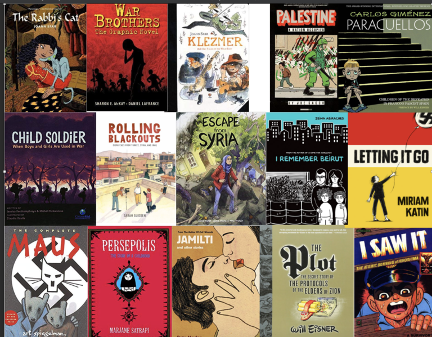
Maus and Persepolis are two of the primary books that tell about results of war and conflict, but there are others that are memoirs of people who have directly experienced and survived and teach us through their own stories. Below is a short list of six of my favorite books.
A game for swallows and I remember Beirut, both by Zeina Abirached are her memoirs about growing up directly on the border between the Christian and Moslem neighborhoods in Beirut during the time of the civil war. Although the war completely surrounded them, her two stories are more about how she, her family, friends and neighbors learned to cope with being in the middle of a war-zone, where gun-fire, bombs and explosions, food and power shortages were part of their daily regime. We become acquainted with Zeina, her family and neighbors and see how they manage their day to day lives, struggling to retain any sense of normalcy. The artwork is not detailed, but effective and engaging for the reader.
War brothers: the graphic novel by Sharon E. McKay and Daniel LaFrance, is although not a personal memoir, is an extremely powerful story that is based on true accounts of Ugandan child soldiers that the authors gathered in hospitals and rehab centers for these children in Uganda. This is the story that nightmares are made of, as it covers the experience of the children watching their parents killed by Joseph Kony’s Lord’s Resistance Army, then being conscripted in the army and taught to kill, maim, and every and any other activity prohibited by the Geneva Convention.
We are on our own is Miriam Katin’s memoir about her experience running away from the Nazis in Hungary with her mother. Katin, now a citizen of America and a respected graphic artist and animator, tells a compelling story of escape, but really focuses on issues of faith during a time when the horrors of the Holocaust caused people to challenge and question their faith and religious beliefs- then and now. She tells her story with artwork in both black and white (then) and color (now). A deeply personal and meaningful story.
In Paracuellos, Carlos Giménez tells about his own experiences growing up in the orphanages of Francisco Franco’s Spain. These were not simply orphanages, as we might understand them, but more like the orphanage of Dicken’s Oliver Twist, but on steroids and managed by the uber-facist government of post-WWII Spain. Powerful is too weak a word to describe his experiences and those of all of the other survivors of these terrible church and government-run “orphanages”.
Barefoot Gen, is a Japanese Manga by Keiji Nakazawa and his a memoir based upon his experiences as a survivor of the atomic bomb blast that destroyed Hiroshima. Told through the eyes of a young boy who saw and survived the blast, and saw its immediate results and affects on the civilian population, such as the shadows on the streets of vaporized people, the walking dead with their skins hanging off of their bodies. This book should be required reading for all students about the un-winnable, horrific nature of nuclear war.
These six books, and many others expose students to the results of war on human beings, beyond the voices of politicians and historians, but from viewpoint of people who experienced and suffered from war first-hand, and on no desire of their own, but rather from people, “leaders”, far away from the real results of their policies. There are many other books, and please feel free to comment and tell me about them.
There and here: Diaspora communities in graphic literature and comix:
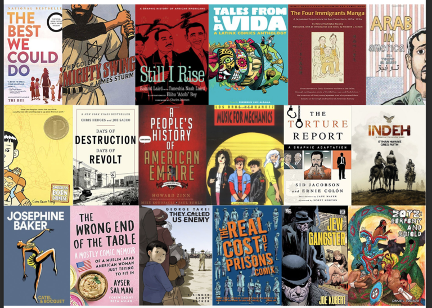
Part 2 One of the first examples of a graphic narrative about an immigrant’s experience in graphic literature is The Four Immigrants Manga (1931), written and illustrated by Henry Kiyama, 1885-1951). The book went out of print and was lost until it was translated into English by Frederik L. Schodt in 1999. The book is a memoir by Mr. Kiyama of his experience coming to San Francisco in 1904 to study art and describes his (and his friends’ experience) navigating western culture through the Meiji era sensibilities, the San Francisco Earthquake and growing racism between Japanese immigrants and white Americans, as well as Chinese immigrants. We are provided an opportunity to read and see the life of an immigrant through their eyes about their experiences, written in their time,100 years ago and not through the lens of the sensibilities of contemporary society and culture. It is at once fascinating, interesting, and honest and shows the tension between the white population and all Asians living there, unwilling to recognize the difference between Japanese and Chinese culture, and language. Jason Thompson describes this manga is “frozen in time with diligent documentary-style realism, with cynical humor and cartoony cheer”. You can read this book here: https://tinyurl.com/vxaompu}.
Part of the beauty and power of this book is that it is authentic and honest. Writers and artists (sometimes one in the same) have chosen this media for several reasons, including the fact that they are not as costly to produce, distribute, translate than movies, theater, or other action-based media. More importantly, they remain closer to the experiences, sensibilities, and knowledge of the narrator/artist, without the input of studios and producers willing to change a true narrative to one that is inspired by actual events. Authors can use complete realism in telling their stories, such as the March trilogy about the life of Congressman John Lewis, or Persepolis by Marjane Satrapi. Or authors can employ a more fantastical approach, such as Art Spiegelman’s Pulitzer Prize winning Maus where his father’s experiences during the Holocaust are described by animals’ characters without any dilution to his story and experiences.
Over the past 15 years or so, authors and artists from around the world have published a plethora of graphic memoirs, biographies, and histories about their own experiences, or those of their family, friends, community, or nation. Stories about where they came from (There) and where they ended up (Here). We know from history that people generally do not leave their homes to become refugees in foreign lands, far away from their communities, and cultures. They flee to escape natural disasters such as floods, fires, and earthquakes. But more often, they flee to escape war, violence, racism, poverty, and hate, and seek opportunities to be able to live in peace, to work, and raise a family. Being a stranger in a strange land is no piece of baklava. They are faced daily struggles learning new languages, laws, customs, cultures, foods, and as well as other newcomers trying to fit in. The people and the cultures that they bring with them are often misunderstood which led to ignorance, fear, and hate.
In my personal collection, I have stores from There- books about and by authors from There: Lebanon, Syria, Israel, Palestine, Libya, Iraq, Spain, Iran, Yugoslavia Eastern Europe, and Here: immigrants and communities from the Middle East, Vietnam, China, South America, Africa, and China. I have stories about the Holocaust, Racism, Anti-Semitism, refugees escaping war and terrorism, as well as those caught up in wars. Stories about the African American, Latinx, Asian-American, and Jewish-Americans. Some of the books are aimed towards primary school, some high school, some to college and beyond. What they share is an authenticity and direct honesty of the storyteller sharing and exposing their story, their pain and often their success in surviving. And as readers, we read and learn, and hopefully acquire knowledge and empathy that reduce our own ignorance and fears.
I am often asked why comics, why graphic literature. As I have written, there are many reasons, including relatively low production costs, they promote literacy and critical thinking, and more. But there are other aspects too. I recently read Comics as Poetry, a lovely analysis of a 4-panel comic by cartoonist Lynda Berry . The analysis was written by Ivan Brunetti in the PARIS REVIEW. Below are some excerpts:
“Comics are often likened to short stories and novels, or (more improbably) animated films, but in a sense, they are also a kind of poetry, an incantation beckoning us to enter their world. The simplicity of their superficial concision can reveal surprising density, layers, and multivalence. In a poem, lines might form and fill a stanza, which literally means “room”; and so, it is with comics, where panels could likewise be thought of as stanzas. Rows, columns, and/or stair-steps of panels, in turn, structure a page (or an entire story) of comics and give it its particular cadence. Even the simplest grid tattoos its rhythmic structure onto the page.”
“…Barry bestows upon all of us, readers, and artists alike, a similar gift. This is from her most recent book, Making Comics: “Stories that lend themselves to comics can be found in a certain kind of remembering I sometimes call an image. It’s a sort of living snapshot, the kind of memory you can turn around in.” …”
“…This is as elemental as comics get: one character in one space, in one continuous action, spanning just a few panels, all housed within an evenly sectioned grid. However, even an element contains vast inner spaces and subatomic particles elusively whizzing and whirring within it, and this seemingly simple strip is, in fact, quite complex and nuanced…”
I have no expectations that graphic literature and comix are a panacea to solve some of problems caused by ignorance, fear, and hate, but along with other popular media, they are certainly a powerful genre that can help.
There and here: Diaspora communities in graphic literature and comix: Part 1 From Wikipedia: “…diaspora is used to refer to the involuntary mass dispersion of a population from its indigenous territories”. A newer and more descriptive term of this is Forced Migrations and sadly there are plenty of examples of this. People forced to move because of war, politics, extreme poverty, and natural disasters. They take what they can, leave their homes and search for a country that will allow them to enter, settle and live safely as productive citizens and members of their new community. Sometimes it happens, sometimes (often) it does not.
I am a member of one of those notable communities described in Wikipedia. My family came from Russia, Poland and Romania in the early 1900s. After a bit of wandering in the USA and Canada, they settled on east side of Los Angeles where I was raised with a lot of hyphenated communities: Mexican-, Chinese-, Japanese-, Armenian, Russian-Americans (and a few others). It was a pretty cool community- we managed to get along, study, play and celebrate with each other, connected with the understanding that no matter what language was spoken at home, what we ate, what holidays we celebrated, we were all Americans. But there was something else that we all shared, something not described in the definition provided by Wikipedia, and that is that people usually do not leave their homeland and homes unless they have to. They leave because of famine, natural disasters, difficult economic conditions, but especially war, hatred and violence. Within the communities that I grew up with, we had it all. I remember the Armenian shoemaker down the street from my father’s store, an elderly man who always had a joke and a piece of candy for me and had been a boy in Armenia when the Turks drove him and his family into the desert to die. But he did not. There were people who came for the economic benefits of not living as serfs, and for the opportunities offered in this country. My grandparents from Russia left to escape Cossacks and Pogroms. Some stayed behind in Europe and were never heard from again after the war. And I had teachers, parents and aunts and uncles of friends who had numbers tattooed on their arms. But we were all in American, living together through good, bad, laughter and tears, and learning to live with each other. And I must admit that all in all, this was a great way to grow up- learning about and celebrating with other cultures and communities.
Fast forward to a few years ago when I wrote my dissertation about using graphic novels to teach social justice in schools at a time when our country – hell, the world- was becoming more and more splintered. It seemed to me that some of the problems (among many others) are an increased lack of understanding and exposure to The Other, and along with that, a growing intolerance and lack of understanding of the experiences of “The Other”, their communities resulting racism, anti-Semitism, hatred and violence. Put simply, this intolerance fuels fear, misconceptions, misperceptions about The Other. I am happy that there are plenty of examples around the globe of people working to change this. I realize that overall, we are in deep doo-doo (so to speak), the words, work, art, and actions of like-minded souls give hope. And each person working, creating and playing with The Other is truly involved and committed to critical practices that will benefit us all (and save us too).
So how and where does this all fit in with graphic literature and comix? To begin, I am a fan of the genre. No, not just a fan, but a BIG fan. For one, there is plenty of evidence demonstrating the many benefits of graphic literature, and comics- the promote literacy- both text based and visual and critical thinking; are a gateway media to reading; are good for language learning; and are engaging and fun. There is more, but that will wait for another blog (or book). More schools and universities are incorporating this media into their curriculum, both as media for the class, or in whole classes, and there are many sub-genres of this media, such as my favorites- personal memoirs, biographies, autobiographies and history told in the form of sequential novels (the title of my dissertation is Beyond superheroes and talking animals).
I recently began to catalog my ever-expanding collection of these types of books, and as I have done so, I had been trying to identify and organize them: should they be grouped by era, nationality or geographical location (all possible solutions)? But then I saw a pattern of diaspora communities – they talked about there, and about here. The cause of their leaving their homelands, and the resulting voyages to their new homes- never easy, and sometimes resulting in them jumping out of the proverbial frying pan into the fire.
One of the benefits and strengths of graphic literature is that they are more personal, and immediate than a movie, or a traditional novel, but they can be just as powerful and engaging.
Titles, topics, and authors coming in There and here: Diaspora communities in graphic literature and comix, Part II. In the meantime, here are examples of some of my favorites: There
Here
The untold stories are the ones that change us and sometimes can change the world-Meera Syal A while back (ok, a LONG while back) I had the opportunity to see an outstanding one-man-show by Corey Fisher called Sometimes We Need a Story More Than Food. It was thoroughly engaging, inspiring, meaningful, and won several important awards. Aside from the fact that I saw it in Oakland, CA on the evening that the horrible Oakland Hills Fire began, I cannot remember any of the details of that play. But I do remember the title, and more importantly I remember the themes, perceptions, and experiences that Fisher presented to the audience that night. They were deeply authentic and spiritual, personal, and captivating, some stories were humorous, but all were honest. They taught us about humanity and ourselves and were and how we learn. This was so much so that I remember the feeling of that show until today, even if I do not remember the specifics.
Years later, while in graduate school I picked up Tell Me A Story: Narrative and Intelligence by Roger Schank and Gary Saul Morson. The premise of their book is that humans learn from stories- the ones that we hear and the ones that we create, consciously and sub-consciously. For example, a person can be listening to a lecture while sitting in a classroom or an office on a hot day, glancing out the window and seeing how beautiful and nice it looks and wanting to go outside. The lesson being taught sits in our mind but is not readily accessed until one day there is a call to apply it. The individual may not remember it directly but does remember the circumstances surrounding the day that they learned it, which triggers the memory to pull out the necessary information to apply to the problem. This is a somewhat simplistic definition about the importance of narrative, but it speaks to a truth that has been observed and studied throughout history. People learn through stories as they are passed down, preserved, and modified through the ages, and learn from them sitting around campfires, reading them in books, listening to teachers in their various incarnations We are surround by them everywhere we go, and in everything that we see. In full admission, I love stories and always have- for entertainment, education, and enlightenment.
So my intrepid readers, what has this to do with comix in general and with Global Comics and Learning in particular? Well, the obvious is that comix are a form of storytelling, a sequential narrative told with pictures with words and sometimes without. They are entertaining and really fun. They help with teaching and improving reading skills, a critical skill, no matter what the language.
But the approach and goals in Global Comics and Learning are more personal and authentic, with little to no connections to super heroes and talking animals (although there are exceptions such as Deena Mohamed’s brilliant Qahera). The comics that I study and teach are primarily non- or historical fiction such as biographies, memoirs, historical events, and more. This presents important and inspirational narratives to people who may not know or be introduced to them (for some examples, please refer to some of my earlier blogs). An important addition to my work is to teach students how to make their own comic, about their own lives to share with students in other countries. I have been teaching to make short comics about a day in their lives (or part of a day) to illustrate similarities (not wanting to wake up) and differences (the different kinds of foods they eat). Speaking of food, I am now working with the students to make a comic that takes place in their kitchens because everybody knows that the best stories are told there. Stories about their ancestors, their journeys, and their meals, which include recipes. I grew up in a pretty diverse community on the east side of Los Angeles where I was introduced to a cornucopia of cultures and cuisines- Mexican, Chinese, Armenia and more. My siblings and I spent a lot of time in our Mexican next door neighbor’s kitchen with all the rich smells and tastes of fabulous food and the stories that went with them. And their kids spent time in ours. We learned about each other, laughing, crying, eating, and drinking (my first taste of tequila was given to me by Lalo our neighbor). We got to know them, then they us (a Jewish family with roots in Russia, Poland, and Romania), and one of the things that I learned is that once you get to know someone and their culture, you cannot really hate them. Also, there are some great parties with all sorts of goodies. In the late 90s while working at the Skirball Cultural Center explored this issue in a web exhibition that I created called Grandfather’s Virtual Kitchen. This was my story, and now I want to encourage others to tell their stories to help break down the ignorance and bad stereotypes of “the other” and learn about our similarities.
“The untold stories are the ones that change us and sometimes can change the world…”, Meera Syal, English comedian, writer, playwright, singer, journalist and actress at the 2023 BAFTA awards.
More thoughts about comics, graphic literature and education
But this has not always been recognized. One reason is that comic books and graphic novels are a relatively new media for classrooms, and until fairly recently, have been primarily associated with entertainment. Over the years journalists and teachers have had fairly negative opinions of the medium, especially as a form of literature, as well as for their use in education and learning. It was only after the publication of Will Eisner’s A Contract with God and Other Tenement Stories (1978) and Art Spiegelman’s Maus (1980) did critics and educators began to recognize the unique qualities of this media, especially in education. Since that time, new titles exploring critical historical events, cultures and communities as well as literature about the genre have appeared in bookstores and libraries.
Several things come to mind when comparing the experience of reading a graphic novel to watching any movie, whether actual or dramatized. Watching a dramatic recreation of a horrible event in a movie has the benefit of images and sound, and is effective in simulating an experience, but I think that the effect passes, unless the viewer has been subject to that kind of event. In this case, the images and sound can stimulate and awaken suppressed memories that can trigger Post Traumatic Stress Disorder (PTSD). Even though we the viewers know that the people on the screen are only actors, and we all know that after the director says cut, these actors get up and walk away. But the triggers can cause intense reactions to actual survivors. The opening sequence of the movie Saving Private Ryan affected so many WWII veterans that many theaters provided therapists and counselors to help them cope after the movie. It was a powerful film, but very difficult to watch.
A graphic novel will tell the story differently, with text and images, leaving the reader’s imagination to fill in sound and time. A book provides a visual context for the words so that readers can pace themselves in order to not get overwhelmed with the content. The illustrations provide enough information to make strong, emotional impact, without overwhelming the reader, while the text gives an accurate running commentary describing the horrible activities taking place. As a book, the reader can remain on a page, or move around in a non-linear manner. The impact of this is actually quite powerful and can remain with the reader far longer than a movie.
Along with the literary aspects of graphic novels and comics there are other practical (as well as theoretical) benefits of using graphic novels in learning environments. For example, the form of a comic book is nearly identical to the storyboards uses in movies, television, theater, websites, and even corporate presentations. In instructing students how to make comics, teachers also provide students with valuable skill sets that are becoming more in demand. Students learn how to create dynamic compositions, transitions from once scene to the next, lighting cues and more. These same kinds of skills are also applicable for creating training tutorials for teaching people practical procedures, such as installing software, replacing a part in a car or assembling furniture. Training videos are good for conceptual projects, but panel-by-panel illustrated tutorials (in the form of a comic) are an excellent media for mechanical training procedures that require the trainee about hard-to-find locations of parts or switches, installing software or changing a vacuum bag.
Along with the educational value of comics and graphic novels, there is also an economic value. According to Publishers Weekly of June 30, 2021, “Combined sales of comics periodicals and graphic novels in North America continued to climb in 2020, reaching approximately $1.28 billion, according to a joint estimate by pop culture trade news sites ICv2 and Comichron. The new estimate represents a 6% increase over 2019 combined sales.” (https://www.publishersweekly.com/pw/by-topic/industry-news/comics/article/86791-2020-north-american-comics-sales-grow-to-1-28-billion.html). This represents an increase of 20-30 million dollars a year (Comic Book Sales by Year, n.d.). The manner in which the numbers are tracked make it very difficult to identify specific titles, publishers or genre, but the numbers are consistent across all of the tracking institutions. It is possible to extrapolate from this, that along with popular titles (such as the Marvel Universe) there has also been a yearly increase in graphic novels and comics that address issues about social justice and identity are used in educational environments. Along with the increase in graphic novels and comics, there has also been an increase in the number of books and scholarly articles about graphic novels and comics.
But these numbers do not account for the increase of Web comics or other online distribution methods. This increase has stimulated a growth in independent and alternative comics that skirt much of the cost, complexity and bureaucracy of the larger, established publishing companies. To counter this many writers are becoming self-publishers, such as Parker and Calderon’s (2015) book, Black Fist and Brown Hand: Ready to Offend. Others are turning to the web, and web comics, such as Deena Mohamed a young Egyptian writer who has been produced graphic novel, Qahera exclusively as a web comic, in English and Arabic for global audience. This is made possible by the ease and cost of technology to produce and distribute outside of the realm of traditional publishers and distributers. Independent distributors are beginning to capitalize on the growing interest in comics, developing online publishing and distribution sites. Also, publishers and distributers are developing mechanisms for independent artists to self-publish books and online comics; for example, Amazon and Kindle developed Amazon Direct Publishing to publish books and graphic novels for free. This gives authors more freedom for creating, as well as opens up new markets for distribution.
Comics and graphic novels are not alone in benefiting from the upsurge in titles and interest. Comics and graphic novels have made great progress in being as serious literature, worthy of formal study, or to examine critical issues. Each year over the past 15 years has seen an increase in the number of articles in many different scholarly journals, reporting on research studies looking at graphic novels as serious literature, history, gender studies, and even education. Augmenting this is the increase in books about comic books- both scholarly and popular. Studies have been conducted on a wide range of important topics relevant to this dissertation. Multicultural Comics: From Zap to Blue Beetle by Frederick Luis Aldama (2010), Comics and Stuff by Henry Jenkins,Creating Comics as Journalism, Memoir, and Nonfiction by Randy Duncan, Michael Ray Taylor and David Stoddard (2016), and Comics Confidential: Thirteen Graphic Novelists Talk About Story, Craft and Life Outside the Box edited by Marcus (2016) are just three of the books that were important and influential reads during the author’s research.
Along with the surge of distributors of comics and graphic novels in brick-and-mortar, and online bookstores, more and more libraries are not only growing the size of their collections, but they are also appointing (or hiring) specialty librarians for comics and graphic novels. For example, Marilyn Taniguchi, the Library Services Manager at Beverly Hills Public Library said that the library started to expand their collection from described the growth of their collection in the late 1990’s and now has over 2,458 books. She stated that, the adult collection of graphic novels was given its own location in the library in the early 2000s and now contains over 1,254 graphic novels, over 1,011 graphic novels in J-Graphic Novel collection, and over 1,203 graphic novels in J Teen Graphic Novels.
The increased interest in using comics and graphic novels for education is not limited to the United States. There are scholars and researchers around the world adding to the knowledge base about graphic novels in education. Scholars and graduate students, Spain, Krakow, Scotland, Sweden are using comic as a resource for educational interaction between students as well as students and teachers. Recent interest and development about graphic novels and education has been made possible by the Internet, which has stimulated global communication between writers, artists, distributors, publishers and fans. These connections have led to multiple fan organizations that meet online (and in real life) to discuss and argue about recent issues of their favorite comics. The Internet also fosters communication and collaboration between scholars, researchers and students as exemplified by the ComixScholars Discussion List, whose listserv that is hosted by the University of Florida English Department. The best, most accurate and informative description of ComixScholars is found on its website, stating that it is an academic forum that serves the interests of those involved in research, criticism and teaching related to comics art. All aspects of comics and cartooning from around the world are open for discussion. Likewise, we welcome theoretical and critical approaches from all disciplinary perspectives. Academic scholars, people working in other institutional frameworks, and independent scholars are all equally welcome to contribute.
The list’s common ground is its foundation in scholarship and its willingness to examine all the givens of comics’ form, culture, and history. It is a place to debate theoretical and historical issues; to post course syllabi and assignments; to call attention to potentially useful scholarship and other resources; and to post calls for submissions for books, journals, and conferences. The list is also a forum for discussing job searches, pedagogy, library acquisitions, financial resources, and other institutional factors that affect comics’ scholarship. The list is intended to focus on the means and ends of scholarship, and our discussions will venture far afield from the immediate interests of most casual comics fans. This list is an excellent resource, daily publishing multiple discussions, questions, and announcements from members from all around the world (this is where the author found the research subjects for this work). This discussion list is also a Community of Practice, as described by Wenger’s (2008) web-based writing “people congregate in virtual spaces and develop shared ways of pursuing their common interests”, this Listserv is a place used by individuals (scholars), communities (individuals interested in comics), and organizations (the institutions that sponsor the individuals).
Research data shows that apart from visual literacy, there was little explicit common ground for the teachers’ reasons to use comics in the classroom (specially to teach social justice). Other benefits, such as teaching a love of reading, critical thinking, ESL and language development are a given. But recent literature suggests that graphic novels can be used to teach a wide range of subjects such as history, literature, social studies, current events, introductory statistics, basic medical procedures and care, and more. In the past, much of the research into comics in education was topic-centric, and with the exception of Lars Wallner’s research on about using comics as resources for educational interactions, there were few) books that specifically relate to formal educational studies, such as educational theory, curriculum development, learning outcomes, comics’ impact on the cognitive development of students, assessment, standards, and other associated topics. But recent scholarship by scholars such as Henry Jenkins (trans-media), Nick Sousanis (the relationship between image and text as well as making online comics that are accessible to the visually impaired, and Luis Frederick Aldama (LatinX comics) have all written extensively about formal aspects of the integration of comics and graphic novels in education.
The literature shows that graphic novels and comics are also different from traditional books. Books rely solely on the imagination and mind’s eye to describe the visuals and actions of any narrative. Each reader creates their own unique experience or movie in their minds. Although there are books that have very visually descriptive, visuals become very nuanced, based on the experience, knowledge and imagination of the viewer. On the other hand, graphic novels are just that – graphics. The illustrations provide markers for the reader to contextualize the characters, local, and action according the to the vision of the author and artist.
The readers continue to actively use their imagination when considering sounds, physical sensations (heat, cold, wind, etc.), and pacing, but only after seeing the visual hints and clues of the author. There are two very different experiences, two ways of looking at the story, and two ways of interpreting the narrative. Transmedia (Henry Jenkins) states that together, they create a more complete experience for the user. Academia is already deep into research about the benefits of using different types of games in different learning environments for different kind of learners, looking at cognitive development, social and emotional impact, and other critical factors. One of the important benefits of using comics is that they are cheaper to produce, and distribute, which means that they are more available to more students than computer games. Data shows a clear trend of continued growth of comics and graphic novels in the marketplace, which means that comics are not going away and that we can expect to see more comics in more classes in different kinds learning environments. It would be very beneficial to adapt the research objectives and projects that used in game-based learning research and adapt it for comics and graphic novels.
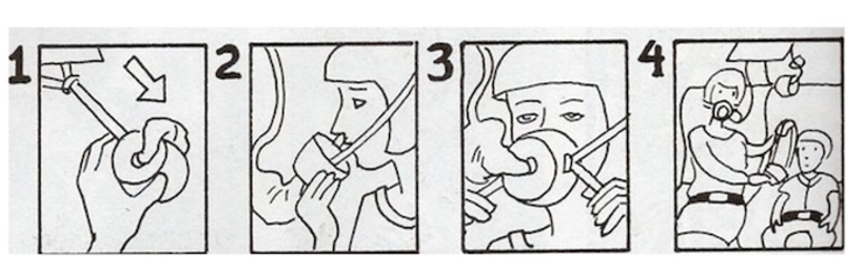
In his movie Cave of Forgotten Dreams about the prehistoric drawings found in the Chauvet-Pont-d’Arc Cave in southern France, Herzog shows that pictorial narrative has been on this planet for at least 32,000 years. Cave and rock paintings, bas-relief sculpture, hieroglyphics and even early alphabets were all based on image-based narrative and are found in every corner of the world where there are or have been human beings. In many ways, image-based stories are part of a global language. If we take this into consideration, it is not difficult to understand the reasoning behind the decision to place a plaque with images of two humans on the Pioneer 10 spacecraft. Images are used to tell stories, teach practical actions, and communicate with others when common language does not exist.
Understanding the history of image-based narrative helps explain why students, why people are drawn to comics. These stories can be used to engage learners of all ages and of all languages, to educate individuals, and communities about the evil as well as the good that humans are capable.
It seems that in the current state of this country, and the rest of world, there is push to build walls to separate people from each other, to divide and separate communities, and promote a general fear of the other. Although there are those who may support these actions, I do not and believes that the physical and metaphorical walls are artificial barriers to understanding and accepting of different cultures. Comics and graphic novels can help people share stories in non-threatening ways, so that we can all better understand each other, In Muulticultural Comics: From Zap to Blue Beetle, Leonard Rifas, a teacher at Seattle Central Community College writes, “the idea that comics could influence readers, cause damage, or have importance follows from the principal that media both reflect and affect the wider society. They do, but not in a simple, mechanical way. Comics supply evidence of widely shared assumptions and also teach particular ways of looking at things. (Aldama, 2010, p. 27)
Comics and graphic novels are not the ultimate solution to the world’s critical problems, but they are an excellent tool that can help. And we have to admit that they are also fun!
Comix in the news: past, present and future It’s been over a year since the war in the Ukraine started. Most days I read the papers and listen to the news, worrying along with the rest of the world about the pain and suffering of the Ukrainian people as they fight for their lives and homeland. The devastation brought on by the Russian army led by a man more concerned with returning to a past fantasy of his own making, rather than to better the lives of his people and the rest of the planet. Another forced migration of people caused by a “leader” lost in his own ego-driven wet dream. And I think about will come from this newest round of refugees caused to flee their homes, jobs, schools, language, and culture, and about the PTSD that will impact civilians by the shock and pain of war, bullets, bombs, missiles, and other tools of destruction and think what a waste it all is.
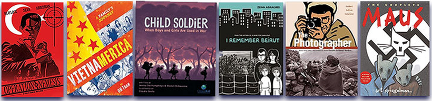
I wrote my doctoral dissertation about using graphic novels to teach people in about out of school about social justice writ large. During this period I have been looking through my library of graphic novels, many of them about the human cost of war as well as its impact society, the pain and suffering, the death and destruction. Books about the Holocaust (Maus; Keeping my hope) Iran (Persepolis), Syria, (Escaping wars and waves: Encounters with Syrian refugees) Lebanon (I remember Beirut), Israel (Not the Israel my parents promised me) Palestine (Palestine: a nation occupied; Green Almonds: letters from Palestine) Afghanistan (The Photographer), Cambodia (Year of the Rabbit), Vietnam (Vietrnamerica: a family’s journey), the Congo (Child soldier: when boys and girls are used in war), Armenia (Operation Nemesis: a story of genocide and revenge), Bosnia/Serbia (FAX from Sarajevo: story of survival; Safe Area Goražde: The War in Eastern Bosnia 1992-1995), stories and personal memoirs about the global refugee crises (Threads from the refugee crises, ) as well as aftermath of war on society(Paracuellos: Children of the defeats in Francisco’s Fascist Spain). Some are personal memoirs, some history, and some historical fiction. These authors tell personal and authentic stories, that engage readers with their urgent sense terror and loss, pain and confusion being forced to leave their homes and communities, seeking refuge in places where their cultures, languages and experiences are not understood, and they are look on with fear and mistrust.
Stories about their experiences help people far from the conflict to understand the experiences and journeys of those peoples who have experienced forced migration, which can assist in helping to absorb the newcomers into their communities. There is always more to be done, but these books are a very good start.
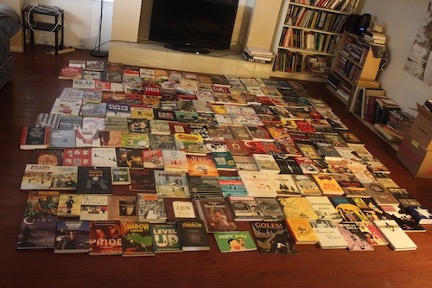
Art, culture and food! I have been pretty much ensconced in my apartment since the start of COVID with very few outings for anything but shopping for groceries. Despite this semi-hibernation my collection of graphic novels has continued to grow. (239+)
There are very few books about fictional superheroes, or events of fantasy. My interest is in themes pertaining to social justice, broadly defined- biographies, autobiographies, memoirs, history, and historical fiction. Three of my recent favorites are: The women who changed art forever: Feminist art- the graphic novel, The hookah girl and other true stories, and the Oishinbo series.
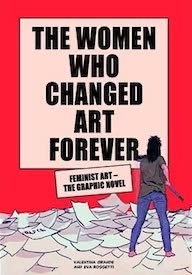
The women who changed art forever: Feminist art- the graphic novel by Valentina Grace and Eva Rossetti (Laurence King Publishing, 2021). This book is about the art and lives of 4 important modern artists: Judy Chicago, Faith Ringgold, Ana Mendietta, and the Gurrilla Girls. Although I can think of other important women artists, I cannot find fault with the selection of the authors, because these stories are not just about their art, but their challenges and successes in standing up to a male-dominated art world that has too often ignored major voices and talents because of their gender. This strong and important book is an excellent resource to introduce young artists, women, and men to work that has had a significant role in both the art world and society as a whole.
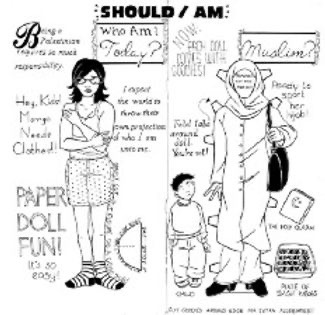
Another recent favorite is the semi-autobiographical The hookah girl and other true stories by Marguerite Dabaie (Rosarium Publishing, 2018). Dabaie tells her very engaging story as a Palestinian Christian living in America. The chapters are short and read like short stories, each one expressing a vivid experience of old and new world cultures, the collisions and resolutions caused by being a new immigrant from a far-away land of conflict. But this is not about that land of conflict, but of trying to celebrate her culture and community in a country that does not readily accept them. Chapter titles such as The Hookah girl, Th true Arab experience, Domestic Goddess, Textiles, The stealth Arab, and Folk medicine weave together a tapestry of old and new, far, and near, providing the reader with a fine introduction to Palestinian culture and community.
These two excellent books mirror many of my other books about conflicts and struggles in communities and cultures culture around the world, important stories to read and learn from.
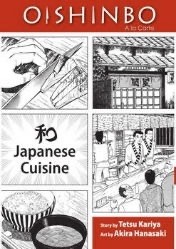
It is the third book (or series of seven books) that has captured my attention and imagination in a different way that I found to be engaging, educational, entertaining, and fun. Although there is conflict, it is not about war, or strife or racism- it’s about food in a cultural setting, specifically traditional Japanese cuisine. Oishinbo by Tetsu Kariya and Akira Hanasaki (VIZ Media, 2014) is a 7 volume Manga, originally published in Japan, translated into English, and read right-to-left like a Japanese book. The premise of the story is that a Tokyo newspaper is celebrating its 100th anniversary by assigning one of their writers to research what defines a fine traditional meal. The author is a slacker, but with an encyclopedic knowledge of the finest Japanese food, where it is made, the ingredients and the people who prepare it. Each of the 7 volumes focuses on specific dishes such as: Fish, sushi, and sashimi; Ramen and Gyoza, and Sake. Each book has the writer traveling to remote areas of Japan, rooting out the finest ingredients, chefs, farmers, fisherman and others. But there is more than just food here.
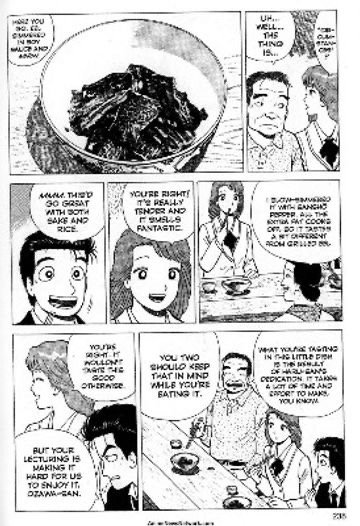
There is conflict, the primary one is between the main character, Yamaoka Shiro, and his father Kaibara Yuzan, Yuzan is an artist and founder of the Gourmet Club (for Japanese food), as well as being a very nasty person towards his son. Both are experts on Japanese cuisine, but when the two encounter each other, frequently at food tastings, they berate and insult each other with comments about the food. Yamaoka’s girlfriend (another writer), and the cast of other characters are called in to broker a cease-fire until the next meeting. Like the pickled ginger used in Japanese cuisine (sushi) to cleanse the palate between dishes, I found this book to be an excellent way to learn about another culture that I’ve been aware of (and a fan of) outside of war and strife.
It has seemed to me that one of the many problems that face humanity is that many (if not most) people lack understanding of different cultures, communities, and people, and do not have clue about them. This problem (understatement), breeds ignorance, fear, and hate (yeah, I know, we already are aware of this). But it is important to chip away at these walls and learn about others outside of situational aspects of that define their lives and try to learn about others as people. I’ve long believed that one of the best ways to learn about different cultures and communities in the kitchen and in meals. We sit (or stand), break bread, tortillas, pitas, injera, gyoza or anything else, and chat, enjoy and learn. It can’t hurt and is sure a lot of fun. We need more books like this! (BTW, Oishinbo also appears in other media, such as Japanese television).
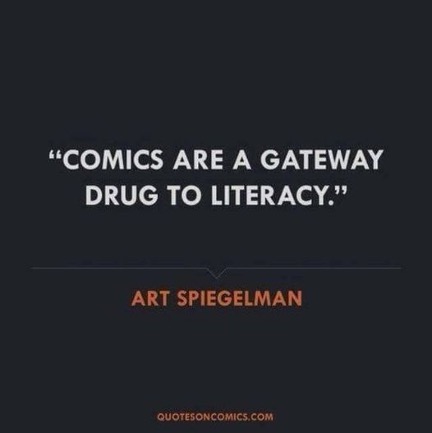
Spiegelman is not the only to say this, I have been saying this for years as have been many other writers, fans, educators and researchers. But it is cool that he has added his voice!
Helpful Hints for Global eLearning, #1
I’ve been working with students and teachers around the world for about 10 years, ever since I was introduced to the great educators of Kidlink Association (https://www.kidlink.net/) by my friend and colleague Dr. Terry Smith. These fine folk are part of a really rich and vibrant community of learners who are passionate and committed to collaborative learning with learners all over the globe, some in Kidlink, some in other associations, schools and independents. It has and continues to be a blast! We learn and laugh together creating a community of essentially global citizens!
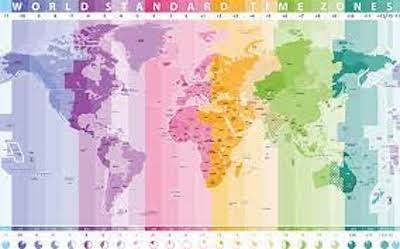
But it is not all fun and learning, as there are some hiccups that appear that are not always easily fixed, but adjustments can be applied to make these learning experiences good ones. The two that most come to mind (and happened to me last week) are the dreaded multiple time zones, and the other that of unstable technology. There is little that can be done about the first, unless you stick to one or two time zones located to the east or west of your location. While this helps you to remain awake and coherent, it does complicate benefits and enjoyment of working and learning with people on the other side of the planet, people that you might never have had the chance to collaborate with. For example, last week, I was scheduled to give a presentation on making comics to my the class of my colleague of Gloria, located in Lagos, as well as a new teacher and class in Bangladesh. Gloria asked me to present at 11:00 am WAT (West African time). No problem, even though it was 3:30 am for me in California. This was not the first time that I needed to get up do early, I’ve had classes that started at 2, 3, and 4 am (5 on is almost like office hours). The solution is pretty easy- one bites the bullet, sets the alarm for about 30 minutes before the class is scheduled to start, and attempt to go to sleep early. I do not always succeed in the latter, since I am often up late fiddling with my presentation. But the excitement and energy of the students and teachers is totally worth it! They want to learn and I am really happy to teach and guide them! The tech issue is a little more problematic though, but there are workarounds. It is important to remember that not all schools, students and teachers have the same technology, and connectivity. There are schools with tip-top, state-of-the-art computers, cameras, networks and internet access. But there are other schools that have some or none of the above. Some may only have access to smart-phones, sporadic and weak connectivity, or older computers. It is important to remember that things happen, even in the schools with the tip-top. Power or internet connectivity outages can happen anywhere. Bandwidth issues can affect audio and video, or transfer of large files. This is what happened to us last week. First there were issues with the Zoom audio with the school in Lagos. We could see each other, and I could hear the class, but they could not hear me. We both checked our system, and I restarted my machine and voila, after a few minutes it was up and running and I was able to start. But our friends in Bangladesh were having more problems. They were using a smartphone and could not connect to the internet. It took about 15 or 20 minutes before they succeeded, but the connection was very problematic. The audio sounded like they were speaking through an avalanche, and the video alternated from clear to pixelated color bars. This lasted about 5 or 10 minutes before all connection was lost. I continued with the class in Lagos, but then they lost their internet connection. Oh well.
But this is not a complete disaster. After about 30 minutes I was able to communicate with FB text, and we agreed to reschedule this lesson, and also add a couple of more sessions before their summer holiday. And I’m communicating with Bangladesh to do the same (as well as seeing if we can bring them into Gloria’s class or perhaps another school on his side of the planet). So if you are a newbie in global learning in real time, here is hint #1: Be Flexible (a skill that most teachers already know. The benefits of the end really do justify the frustration of the means. We learn to share knowledge and experience together, which helps the development of a global, collaborative and creative community, starting at an early age, something that I believe is truly necessary for our planet. Stay tuned for future hints about issues such as acoustic hell and more….
Comics in classroom: history and more As I wrote in the previous blog, on June 5 I gave an online presentation about comics in the classroom to Anuradha Sharma’s class in Bangalore India. One of the cool attributes of this presentation was that the students and teachers who attended were from other countries such as Brazil, Greece, Nigeria, South Sudan and a few others. It’s an example of the coolness and benefits of global eLearning- students get to learn about other countries and culture through real people and no just books and movies!
In this 20 minute class I talk about the history of sequential visual narrative through the ages, non-fiction and historical fiction comics, as well as comics that address saving the environment and sustainability, as well as give examples of these books. And if I may say so myself, this is not a dry lecture! Please leave a comment about what you think, and please become a subscriber to one of the levels listed on this site!
Soapbox on environment, global education and comics Early this week I gave a presentation about using and making comics to a class in Bengaluru, the capital of India’s southern Karnataka state.There were about 50 students and teachers in the class, but at times the number went up to 68 or down to 40 depending on connectivity. But not not all of those in attendance were in Bengaluru- there were participants in other locations in India, as well as Brazil, Italy, South Sudan, Nigeria and several other countries. The theme of this conference was World Environment Day and all of the participating students made presentations about global warming, sustainability, and other critical aspects of protecting the environment, and saving the planet for all life. It was an amazing day of presentations about science, the economic impact on the world, and many offered ideas, very good ideas about programs, activities and actions that individuals as well as groups can to save the planet for all life. My presentation was about the role that comics and graphic novels can play in communicating and educating students and adults about what is happening and what can be done. I shared several excellent books about illnesses caused by pollution that I found on the Graphic Medicine website (a really fine resource) , as well as some general research (see below).
There are no simple solutions to the problems that face humanity now. The problems are big and complex, too much for one person, group or nation to solve. The problems facing us require a collaborative effort by people from around the globe. People with a range of different skills and knowledge who can identify solutions, build programs and policies that can save our planet. One of the most important skill sets is the ability for people of different nationalities to learn to collaborate with others at an early age, so as they grow and develop they will also create the kind of community of learners and activists that can accomplish what really needs to be done. And in terms of outreach and education, comics can play an important role, but more of this in future blogs.
I’d like to thank Anuradha Sharma, a Lecturer at Anantha Vidya Nikethan in Bangalore India for inviting me to present as well as all of the students and teachers who participated. You are all building the future for us all.
If anyone knows about other titles, please send them to me and I will add them to this list!
Comix are fun, but wait, there is more…. Besides being fun and engaging, there are many other benefits to using graphic novels in education, such as they: scaffold students for whom reading and writing are difficult, foster visual literacy, support, and motivate language learners, and provide a stepping-stone that leads students to more traditional forms of literature.
We know that literacy is not limited to just books and text-based content, but consists other models and media, such as comics, movies and more, that address the needs of those who do not always respond to just text and reading but can develop matching critical thinking skills as those who do, by reading topic-appropriate comix and graphic novels.
Comix and graphic novels can be used to study a wide range of topics, such as literature, journalism, history, sociology, philosophy, statistics, the arts and more. These books are not replacement of traditional text but are a different way to reach out to a wider variety of learners, such as visual thinkers. This is particularly relevant when we view this through the lens of Howard Gardner’s theories about multiple intelligences. The interconnection of text and images, and sequential or non-linear stories, graphic novels promote critical thinking. The results are stories well suited for the visual learner with rich, detailed images as well as engaging narratives, for all people to understand, enjoy, and learn from. In his book Comic Books as History, Joseph Witek, the Director of graduate studies and professor of English at Stetson University writes that “the comic book, a widely accessible and commercially available medium, is now being chosen a form by serious writers whose themes have traditionally been expresses in the forms of verbal narratives (both literary and historiographical),” and that a general reading audience now exists for narratives written in a medium, which has historically been considered solely the domain of sub-literate adolescent fantasies of the crassest commercial exploitation of rote generic formulas. Comic art is thus a literary medium in transition from mass popularity and cultural disdain to a new respectability as a means of expression and communication, and this new respect is evident first in the attitudes of the creators themselves.
One of the primary delights in comix and graphic novels is the freedom to surprise us. Graphic novels and comix provide a more nuanced view that includes a variety of modes of communication and tools for meaning making broadening the definition of literacy.
Subjects that are difficult to broach in the classroom, such as race, religion, and the anxiety about community differences can be introduced to students in graphic novels in ways that other media cannot. Graphic novels are immediate, reversible, and non-linear and can aid untrained teachers on how to handle differences and start conversations about difficult issues. There are numerous examples of graphic novels that tell stories are about youth growing up in new and different, and how the events that they experience shape them into adults, young adults, or even mature youth. These stories describe transitions from childhood to adulthood, and from immigrant or refugee status into a new culture and community. For example, Gene Luen Yang’s American Born Chinese explores the issue of identity from multiple perspectives- emotional, personal, social, as well as multicultural perspectives that address cultural and community issues relating to diversity. Authors from around the world have found the genre to be an excellent media to tell their own stories. Graphic novels examine assumptions of complex issues, such as of shifting identities, in an oblique manner, like Plato’s Allegory of the Cave. But in this case, the stories are told as graphic novels rather than shadows.
A graphic novel tells the story only with text and images, but reader use their own imagination to select voices, languages, sound effects and background music. The illustrations provide enough information to make strong, emotional impact, without overwhelming the reader, while the text gives an accurate running commentary describing the activities taking place. As a book, the reader can remain on a page, or move around in a non-linear manner. The impact of this is quite powerful and can remain with the reader far longer than a movie.
Along with the theoretical, there are also practical benefits of using graphic novels in learning environments. For example, the form of a comic book is nearly identical to the storyboards used in movies, television, theater, websites, corporate presentations and more. In instructing students how to make comics, teachers are also providing students with a valuable skill set that is becoming more in demand. Students learn how to create dynamic compositions, transitions from once scene to the next, lighting cues and more. These same kinds of skills are also applicable for creating training tutorials for teaching people practical procedures, such as installing software, or replacing a part in a car. Training videos are good for conceptual projects, but panel-by-panel illustrated tutorials (in the form of a comic) are an excellent media for mechanical training procedures that require the trainee about hard-to-find locations of parts or switches, installing software or changing a vacuum bag or putting on an oxygen mask in an airplane.
I Love Comix!
As the title says, I love comix, and always have. I learned to read early with comic books, Mad Magazine, and the World Book Encyclopedia (my taste always eclectic). I continue to read and enjoy them as well as study, teach and write about them. My area of interest is reflected in the title of my dissertation, “Beyond superheroes and talking animals: teaching social justice with graphic novels”. Global Comix and Learning grew out of this interest. At its core it promotes global citizenship for students around the globe by learning to tell their own stories with comics. In collaborative eLearning environments, the students learn the basics about theory and history of comix, visual narrative, and the formal elements of making comix. Students create stories about themselves and collaborate with students in other schools gives them opportunities to learn about each other and their communities and cultures. Creativity and collaboration critical skills are truly needed for the 21st century. And on top of everything, comix are fun too!
So yesterday I binged on Ken Burns’ brilliant, immensely powerful, critically important, and sadly still relevant ndew documentary, “The US and the Holocaust”. In it, he shows the path that led Germany to hitler, his war on Europe and the world, and specifically the war on the Jews where his goal was to completely wipe out the Jews, which he nearly accomplished by murdering 2/3 of European Jewry. There are film clips, photos and documents of everything, from the stripping of rights, burning books, sending off to Ghettos and killing camps, as well as the outcome. Along with this story we are shown the American responses- disbelief in what was happening despite reports from news outlets and some aware and honest diplomats. We are also shown clips of henry ford and hitler, charles lindburgh’s anti-semitic, anti-interventionist speeches as well as comments in support of hitler, and the ways that many white Christians here did all that they could do to prevent refugees and immigrants from entering the US including withholding critical documents sent from Europe describing the situation as well as other documents that actually gave permission to increase the number of refugees to be allowed. We see the German Bund, a pro-nazi organization here in the US that purported to be all American. As my good friend Annamaria, a retired professor of Jewish history Krakow said, “sounds like burns dug up all the worms…”. I watched and thought of my teachers and friends whose families were killed. Most of my family came in the early 1900s to escape the pogroms, anti-Semitism, cossacks and Czar’s secret police. I also thought of my Armenian friends who lost family in the Genocide led by Turkey, as well as my Mexican, Japanese, Chinese and Black friends who all suffered from the same kind racism that still exists today, now maga-driven that still causing suffering here and around the world. Damn. But next weekend is the start of the Jewish new year, with it’s hope for redemption from hate and violence and the desire for a sanity and peace and a sweet year.
I recommend watching the documentary series as well as this interview with Stephen Colbert and Ken Burns. https://youtu.be/uOBdQJQ9FJs
Thinking about problems arising from the lack of understanding about the very real trials and tribulations caused by forced migrations, and trying to adjust to a new land, new customs and new ways of living, I thought back to this passage from my dissertation about a very creative project in West Florida.
One of the more interesting programs using graphic novels to investigate social justice takes a very different approach. Rather than using existing graphic novels to start conversations, a team of educators provided instruction about the formal elements of graphic novels, similar to the material found in McCloud’s (1994) Understanding Comics. The students then created their own stories and in order to explore their shifting identities. This project, called Graphic Journeys’ Project was developed in a in West Florida school district to teach middle schools students towrite their own stories in the form of graphic novel, theorizing that graphic novels can assist people in their community transitions from immigrant or refugee to new resident in order to gain a better understanding of who and what they are becoming as well as the process itself.
This project was done with 32 middle school English learners who told their personal family stories about immigration through graphic novels. A critical component of this project was to help them explore their shifting identities from where they came from (leaving behind families, friends, communities and cultures) to a new country where they were required to learn and adapt to the language and customs. Graphic Journeys was a multimedia literacy project that took place over a period of six months in the ESOL classroom of a diverse public middle school on the west coast of Florida. Asa multimedia, personal writing project, Graphic Journeys engaged teen ESL classes in the composition process while building bridges to help them acquire academic English language skills. This project offered 32 ELs the opportunity to research their family’s immigration narratives and depict them as graphic stories. The stories were compiled and published in hardcover books that were distributed to each participating student at a large-scale family/community event. The context of The Graphic Journeys project was to create a framework for students to explore identity-as-narrative, situated in an ESL classroom. The students created a conceptual framework for their telling own stories in detail in the graphic novel and comics format. The teachers “supported the students’ reflections on the implications of this type of project, and provided recommendations based on integrating a multi-literacies pedagogy with academic English language instruction” (Danzak, 2011, p. 187). The result of this is that students were able to increase their knowledge of the English language by using a multi-literacy pedagogy to telling stories that they were intimately familiar with-their own.